


For fashion designer Olumide Oyewunmi, that discovery came long before he moved abroad. While running his fashion brand, MideTush, from Ibadan, he was already making clothes for customers in the US, UK and Canada.
Since leaving Nigeria in 2022, Olumide has taken his designs to international fashion shows, including London Fashion Week, earned media recognition, and expanded his work into fashion production.
But taking a brand global comes with its own challenges. There are new markets to understand, relationships to build, customers to win over, and sometimes, an entire business to manage from another country.
We spoke to him about how it all started, why he left Nigeria, what London Fashion Week did for his business, and the lessons he learned from building a fashion brand across three countries.
Let’s start from the beginning. How did you get into fashion?
I was creative as a child. I used to draw and paint things in my immediate environment that inspired me.
When I got into university, I started exploring fashion more seriously. I studied Meteorology and Climate Sciences at the Federal University of Technology, Akure (FUTA), which is completely different from fashion.
In 200 level, I told my dad that I was not going to graduate with a first class. It was not because I was not intelligent or did not want to study. My mind was just somewhere else.
While lecturers were talking about weather forecasting and meteorology, I found myself thinking about colours, mood boards, shapes, fabrics and fashion. I even used to look at what the lecturer was wearing and think about how I would style it differently.
I learnt how to sew from my immediate older sister. She knew how to sew, so whenever she was not using her machine, I would practise using it. I never learned to sew professionally.
Eventually, I bought my own machine for about N15,000 and started fixing people’s clothes in the hostel. My friends would bring clothes to my room because they were too big or too tight, and I’d charge them to fix them.
Sometimes, I made about N5,000 in a week just from doing that. That was a lot of money for a student at the time.
I also organized fashion shows and won a couple of awards in university. All those experiences eventually pushed me to establish my own brand, which I registered in 2016.
Lovely. So what happened after school?
I was posted to Ibadan for NYSC after graduation, and after NYSC ended, I decided to stay back and build a life there. One of the biggest considerations for that decision was the cost of running a business.
At the time, about 75% of my customers were in Lagos, but setting up a showroom and workshop there would have been much more expensive. I had to be realistic about what I could afford and my long-term growth.
So I got a showroom about two or three minutes from the University of Ibadan, close to shopping areas and other commercial activities.
I also had my workshop in a different location, close to the fabric market, so sourcing materials was easier and cheaper. I travelled to Lagos a lot for fashion shows, exhibitions and client appointments.
I enjoyed the convenience. My house was about 10 minutes from my showroom. I could leave home at 8:50 a.m. and get to work by 9 a.m. If I were living in Lagos, I would not be able to do that.
Ibadan gave me the opportunity to build my business at a cost I could manage, and I took it.
Most of your customers were in Lagos. What made them choose you over designers closer to them?
Trust and credibility.
Some of my customers had been with me since university, when I was organizing fashion shows and winning awards. They watched my journey and saw my work improve over time.
So, rather than going to someone they don’t know, they preferred to work with someone whose work they could trust. My social skills also helped me a lot. I’m very sociable, and whenever I go out, I connect with people.
I have always understood that the way I present myself is also a way of marketing my business, so I wear my own designs. When people ask where I got it, I tell them I made it.
They usually say they want something similar for themselves or someone else. Social media helped as well. I put my work out there consistently, even when it was not getting the traction I wanted.
Do you remember your first international order?
Yes. It was in 2018, when I was still in Ibadan.
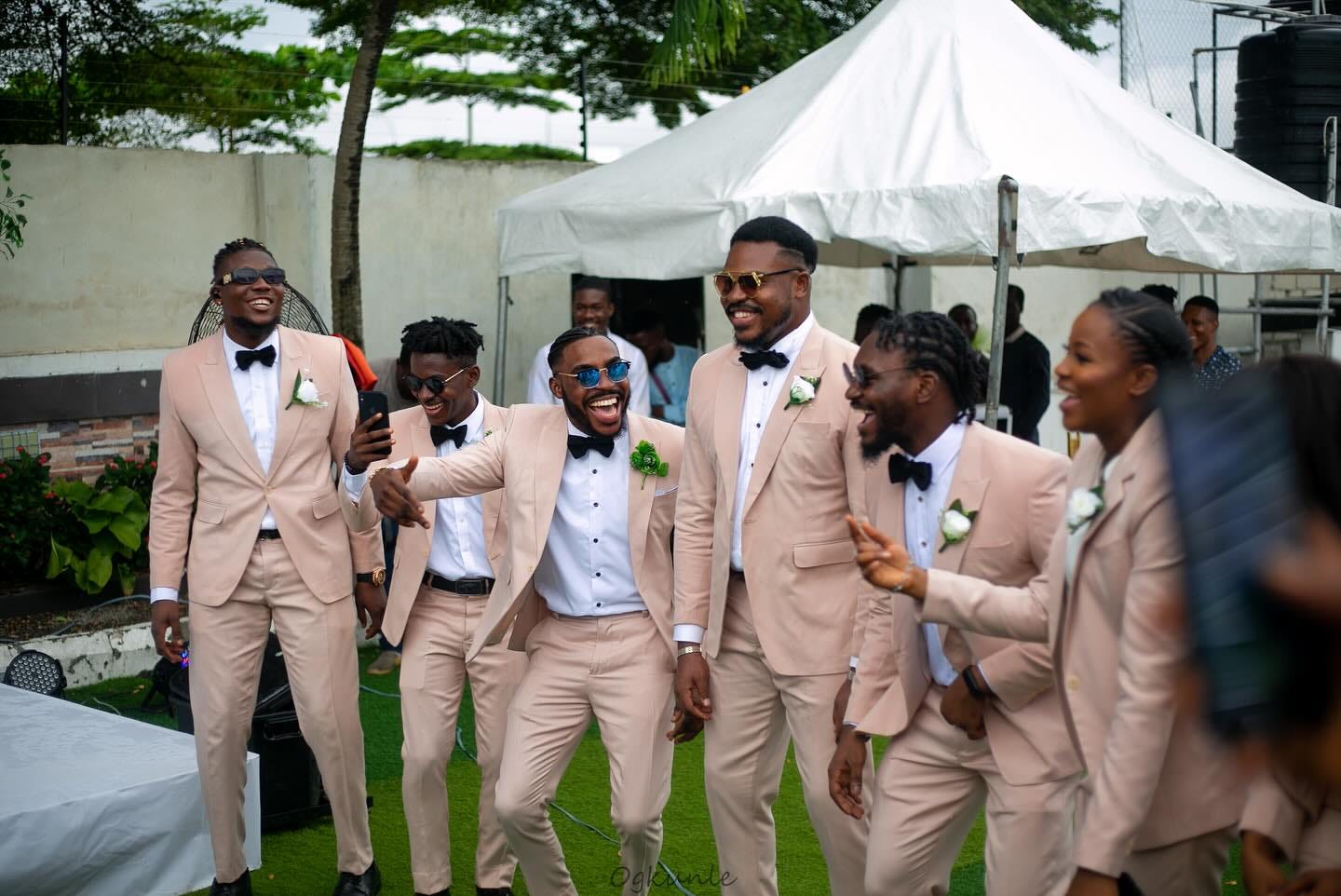
My sister had been living in the US since around 2016, and she connected me with one of her friends who needed outfits for a wedding.
I made suits for about eight groomsmen, and everything came out perfectly. Everything fit like a glove, and they loved it. I was very happy because I did not have high expectations about the gig.
One thing about me is that whenever I get a positive review, I share it on social media so other people can see the work that is being done.
That order reaffirmed my confidence in what I was building.
Love it. Was that when you realized your brand could become an international one?
No actually.
I used to run a weekly series showing my fashion illustrations alongside the finished designs. The goal was to show people what I had drawn and the actual outfit being worn by a client.
I did that consistently for about three months, and it really grew my audience. One of my designs went viral, and I gained about 2,000 followers in a day.
People started reaching out to me from Canada, the US and the UK. They would ask for my dollar account or a pound account, but I did not have one. I eventually had to open a dollar account.
That was when I knew for sure that MideTush could travel beyond Nigeria.
International customers were pouring in, and your business was thriving in Ibadan. Why then did you leave Nigeria?
A lot of things contributed to that decision.
I had been trying to relocate to Canada since 2017, but my visa was not granted. I tried again in 2019 and also explored opportunities in the UK.
There were business considerations too. Some of the policies and costs of running a business in Nigeria were becoming frustrating.
I remember wanting to put up a billboard for my brand in 2022 and being told about an additional government charge of around N50,000. As a small business owner, that was a lot of money.
But the defining moment was something very emotional.
One day, a man was shot in front of my office. I witnessed what happened from my window. Immediately the attackers left, I ran downstairs to help him.
I tried stopping cars so we could take him to the hospital, but nobody wanted to stop. Some people were bringing out their phones to record what was happening.
Eventually, a pastor stopped and helped us take him to the hospital. Unfortunately, the man did not survive.
I was wearing a white shirt that day, and it was stained with his blood. I had to go to the police station to make a statement because I was one of the people who helped him.
When I got home, I cried. I kept thinking about what had happened and what it said about the value of human life here.
I could not go to work the next day.
That experience made me more determined to leave Nigeria. I knew I wanted to live somewhere I felt safer.
About five or six months later, I relocated to the UK in September 2022.
I’m so sorry about that. Did you have to close your business?
No. The business is still operating in Nigeria.
Before I left, I sold almost everything in my showroom. Furniture, television, air conditioner, mannequins and other things. I needed to raise money for my relocation.
But I kept my sewing machines and production equipment.
I had a separate workshop where my tailors worked, so I retained that part of the business.
When customers place orders, I communicate with my manager and tailors in Nigeria, send the necessary funds and specifications, and they handle production and delivery.
Interestingly, the last few months of 2022 were some of the busiest months I had ever experienced.
From September to December, I had a huge influx of new customers. Someone influential referred my brand, and that brought in a lot of orders.
I was able to reinvest some of the money into additional production equipment.
So, relocating did not mean shutting down the business. It meant finding a different way to run it.
Awesome. What was it like trying to settle down in the UK?
It was challenging because I had to start again in an unfamiliar environment.
I already had the skills, experience and achievements, but I still had to build new relationships and earn people’s trust.
I initially lived in Plymouth before moving to Leicester. Each move meant meeting new people and finding new customers.
I started attending fashion shows, exhibitions and networking events to introduce myself and my work.
And whenever I went to these events, I made sure I was dressed exceptionally well in my designs.
Sometimes, people would ask why I was overdressed. But I knew what I was doing.
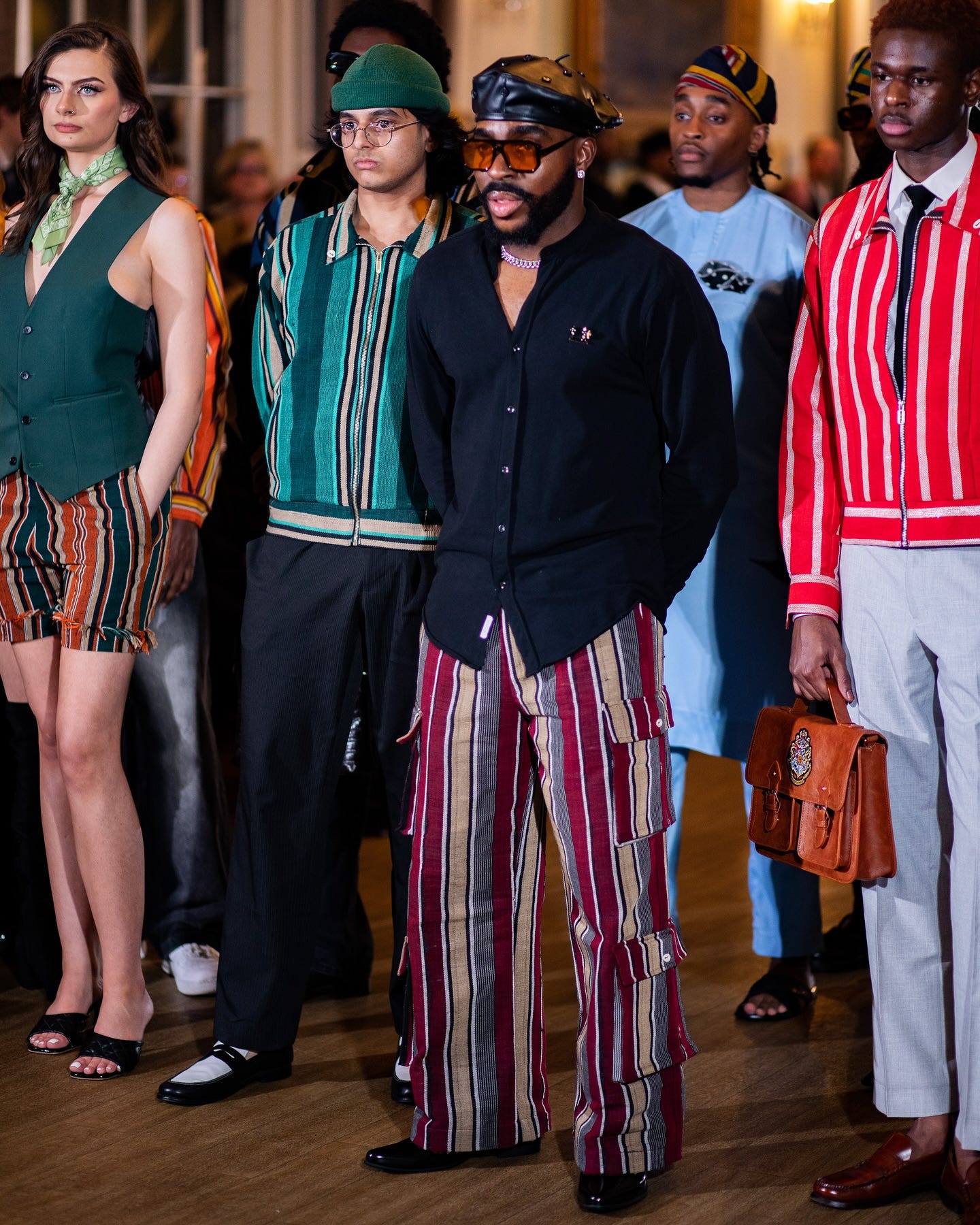
If everyone was wearing black and I showed up in an orange jacket with cowries, people would notice.
They would ask questions, we would start talking, they would follow me on Instagram or Twitter, and they would eventually reach out to place orders.
That was how I started building my presence in the UK.
I also had a full-time job as a credit specialist at an energy company, so I had to balance that with running MideTush.
My job was mostly Monday to Friday, while fashion events, exhibitions and client engagements often happened on weekends. I scheduled consultations for evenings or days when I was not working.
It was not always easy, but I made it work.
Did moving abroad affect your Nigerian customer base?
Yes, it did.
Initially, I was still getting orders from customers in Nigeria.
But once some customers realized I was no longer physically in Nigeria, they became concerned about delivery timelines and whether they would still get the same service.
There was also the assumption that because I had moved to the UK, my prices would skyrocket.
I gradually lost some customers in Nigeria, but I was gaining new customers in the UK.
That was one of the realities of relocating with an existing business, really. You have to accept that your customer base will change.
Fair enough. How did the opportunity to showcase at London Fashion Week come about?
I joined a fashion incubator programme in conjunction with Unity Design Global Network and the African Fashion Foundation.
They were looking for emerging designers in the UK whose work had an Afrocentric influence.
I applied and was selected. I was actually number one on the list.
I had already participated in Leicester Fashion Week, so I had started building some recognition in the UK fashion industry.
When I received the email, I was really happy. Being selected to showcase my collection at London Fashion Week was a big deal for me.
I received the guidelines for the showcase, including the theme and what was expected of my collection.
It was one of the proudest moments of my career because I got to meet people I admired for years, connect with other creatives, and introduce my designs to a bigger audience.
Sweet! What did it actually cost you to participate?
A lot of money!
When you are creating a collection, you make a financial investment without knowing exactly how much you will earn back.
You have to develop your mood board, choose your colours, source fabrics, produce the pieces and think about which designs people will actually want to buy.
Then there are the other expenses. You have to pay models, photographers, videographers and everyone involved in bringing the collection to life.
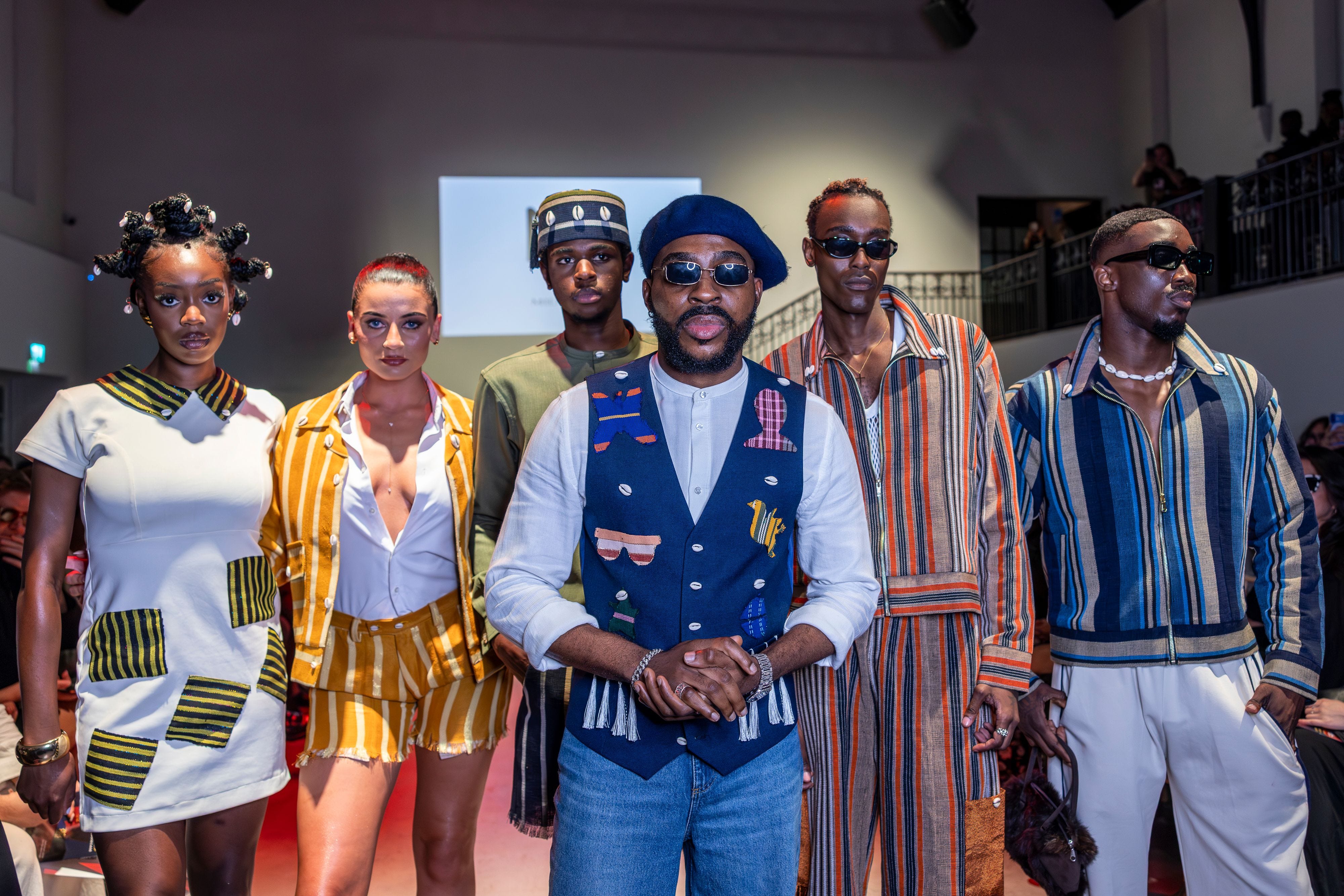
For my showcase, I created five key designs. I had to think carefully about which ones would be commercially successful. I selected two designs that I believed would perform well, and both sold out within three months.
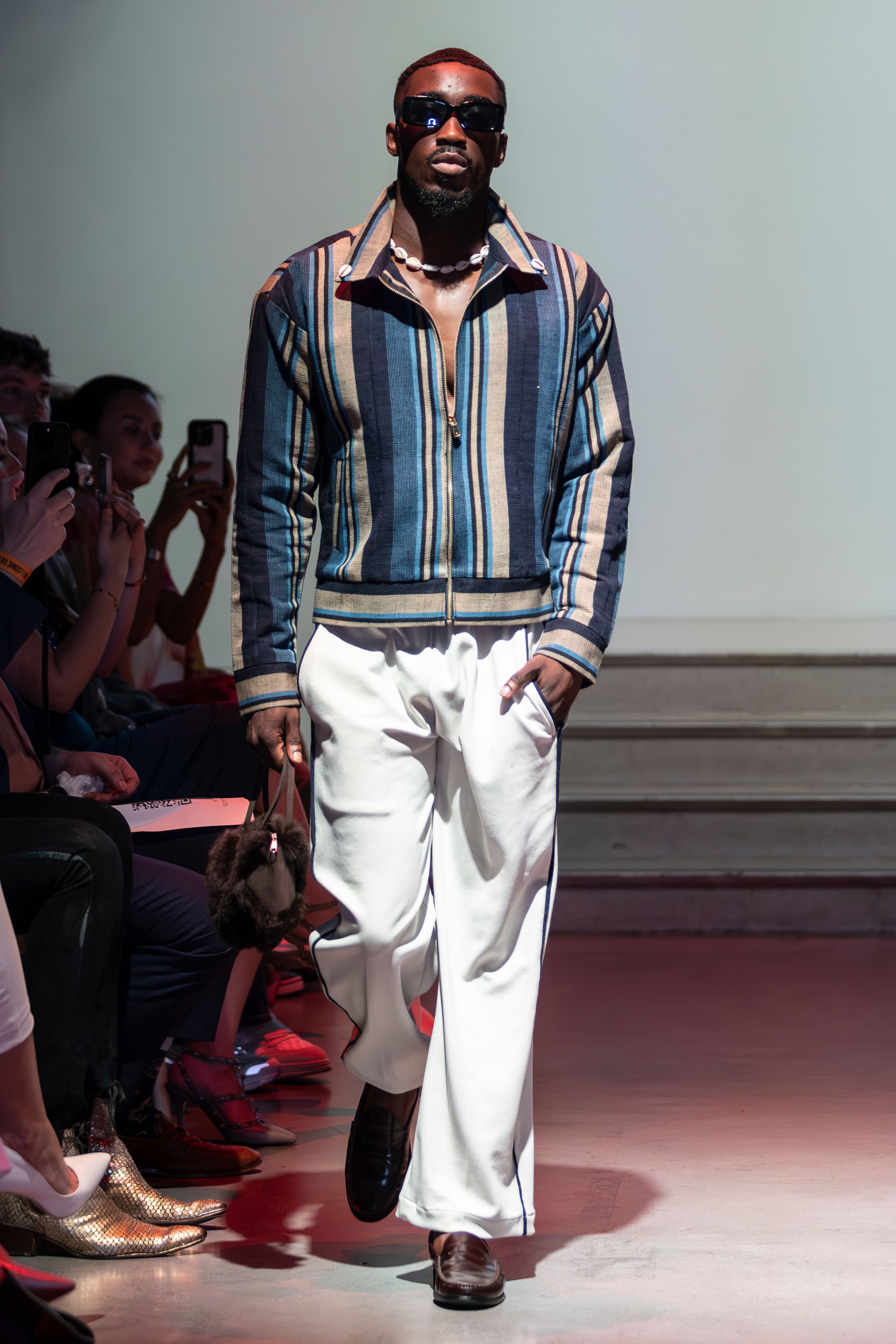
The jackets and cargo pants were easier to sell because they were versatile and could be worn by different people. Some of the other pieces, like the mini dresses, had a more specific audience.
So, beyond creativity, you have to think like a business owner.
Was it worth the investment?
Yes and no.
In terms of visibility, absolutely.
After the show, my designs were featured in The Guardian UK and at least 10 other international publications within the UK and other countries. I did not pay for those features.
A core memory for me was when a group approached me after the show and placed orders for four of my aso-oke jackets on the spot. I had already prepared the designs on my website as drafts, so I was able to publish them quickly and direct them to the website.
Financially, it’s not always straightforward. I did not sell every piece from the collection before leaving the UK. Fashion collections take time to sell, and relocating meant I had to introduce those same designs to a new market.
So, the publicity was a major win, but I still had inventory to sell, and that is something people do not always see when they look at fashion shows.
You were gaining momentum in the UK. Why did you decide to go to the US?
I applied a few times for the UK’s Global Talent visa based on my achievements in the creative industry, but unfortunately, it did not work out. So I decided to pivot and explore opportunities in another country.
If I had gotten the Global Talent visa, I probably would have stayed in the UK because I had spent three years building relationships, gaining recognition, and establishing a customer base.
Moving to the US meant starting over again, and that was not easy. But I have been here for nearly a year, and I’m making it work.
Curious, how has it been building in the US?
I had to start putting myself out there almost immediately.
Within my first two months, I signed up for a fashion showcase in New Jersey because I knew I could not allow the passion I had built over the years to disappear just because I had moved to another country.
I have also started exploring fashion production. In the UK, I was primarily focused on designing Afrocentric pieces and creative direction. But now, I’m expanding into producing fashion events.
I produced the SB Fashion Global Showcase during New York Fashion Week. I have also received two international awards since moving to the US. I’m still learning the market and mapping out the next phase of the business.
For me, growth is in stages. One year might be about publicity and recognition. Another might be about awards, partnerships, or launching a showroom. You just have to keep building.
Well done. How do you adapt your designs to different markets without losing your African identity?
It’s about understanding your audience.
What people wear in Nigeria is different from what people wear in the UK or the US. Their lifestyles, preferences and expectations are different.
In Nigeria, you could produce 100 pieces of aso-oke trousers and sell them quickly. But if you try the same thing in the US, you might struggle because that is not necessarily what people wear every day.
So, I try to find a balance between cultural authenticity and contemporary relevance.
For example, cargo pants are very popular in the US. Instead of abandoning my Afrocentric identity, I decided to make cargo pants using aso-oke. The silhouette is familiar, but the fabric and cultural influence make it different.
I do the same thing with jackets. Aso-oke is a relatively thick fabric, so it works well for jackets that people can layer during colder months. Ultimately, my goal is to create pieces that people can incorporate into their everyday wardrobes while still recognizing the African identity behind them.
What’s the hardest part of managing a fashion business across different countries?
Firstly, it’s having to establish yourself repeatedly. When I moved to the UK, I had to prove myself to people who did not know me. Then, when I moved to the US, I had to do it again.
The second one is managing production in Nigeria when I’m not physically there. The first two months after I relocated were particularly difficult because I was constantly calling my team for updates. For example, I had to replace a dispatch rider because he tried to inflate prices.
But one thing that has helped is the trust and mutual respect I built with my tailors years before I relocated. Most of them are older than I am, and I have always treated them with respect. I do not believe that because someone works for you, you should mistreat them.
Sometimes, my tailors even correct mistakes I have made with measurements because they have years of experience. I respect their knowledge, and they respect the business. We are making it work.
When you look back at where you started, how does it feel to see your brand on international runways?
It makes me very happy.
Sometimes, I go back to my Instagram page and look at designs I created in 2018, 2021, or 2022, and I can see how much I have grown.
I remember tweeting in 2018 about wanting to participate in New York Fashion Week. A few months ago, I went back to that tweet and realized I had actually done it.
It’s a beautiful feeling because some of these things seem almost impossible when you are dreaming about them. But I have learned that success is not defined by one milestone. It’s about consistency, growth, impact, and staying committed to your ambition.
I studied Meteorology and Climate Sciences, but I knew fashion was what I wanted to do. I have continued learning, experimenting, and improving over the years. So I’m grateful and happy about how far I have come, but I also know there is still so much more I want to achieve.
That’s lovely. What’s your advice to an African entrepreneur who wants to take their brand global?
First, believe in the value of your skills. You have to understand that what you are creating has value, even if you are operating from a small space in Nigeria, Kenya, or anywhere else in Africa.
You also have to be willing to learn. Patience, discipline, and the willingness to build relationships are everything.
Also, you cannot be shy about putting your work out there. There was a period when I was posting on my Instagram Stories at least 10 times a day because I wanted people to associate my brand with aso-oke.
I would post about how the fabric was made, where it was sourced, my designs, my collections, and anything related to the brand. Eventually, people started recommending MideTush whenever someone asked about aso-oke designs.
That’s the kind of visibility you build through consistency.
Document your journey as much as possible, too. Take pictures, keep records of your work, share your achievements, and show people what you are doing.
Sometimes, I look at pictures from fashion events I attended in 2015 and remember the designers I met and the opportunities I had. Those records remind me how long I have been doing this. It is easy to think that what you are doing is small or inconsequential, but in five years, you will be grateful you documented it.
Most importantly, understand your customers, embrace new opportunities, and keep improving your work. Growth happens in phases.
Very apt. So what’s next for MideTush?
I have a lot of goals.
One of my plans while I was in the UK was to open a showroom in Leicester. I wanted to create a space where people could shop for aso-oke, ankara, batik, tie-dye, and other African-inspired pieces.
I also wanted to allow other African fashion creatives to showcase their work, including bags and accessories. That plan had to change, but the vision is still intact.
Right now, I’m exploring opportunities in the US, including fashion production, creative direction, and collaborations that align with my goals. I would also love to work with international fashion houses someday.
I’m not where I want to be yet, but I’m happy with the progress I have made. I know l will get there.